How to Care for Your Cutting Board: The Complete Guide
Keep it dry
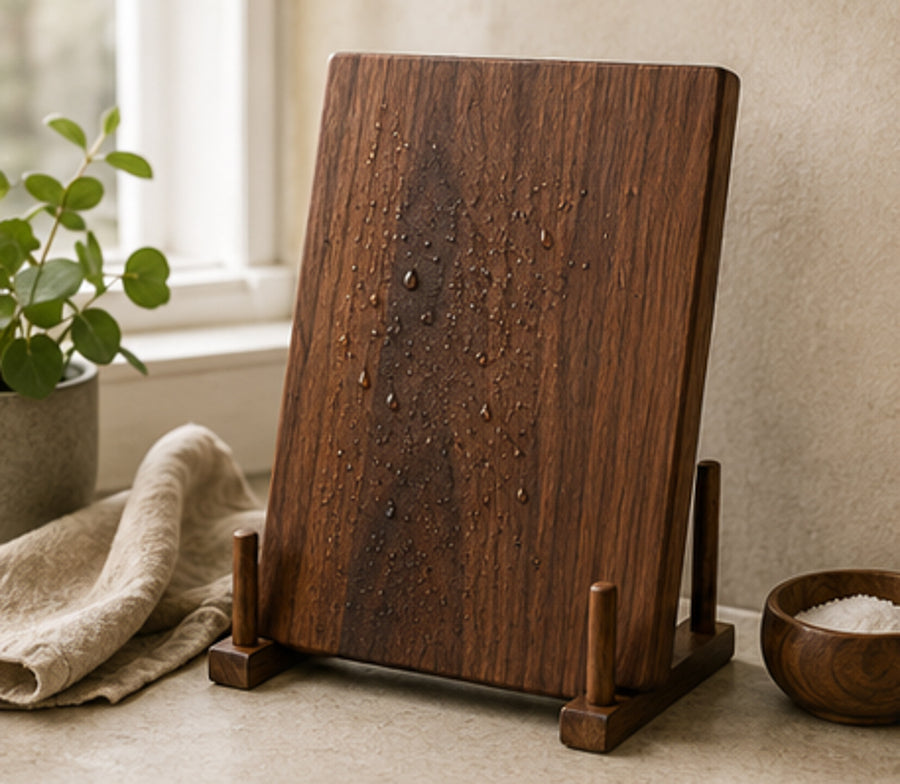
Stand it up. Let it breathe.
The single biggest mistake people make is leaving their board flat on the counter after washing. Water sits on the surface, soaks in unevenly, and the board warps. Instead, stand it upright on its edge — both sides get airflow, it dries evenly, and it stays flat for years. This takes ten seconds and makes a real difference over time.
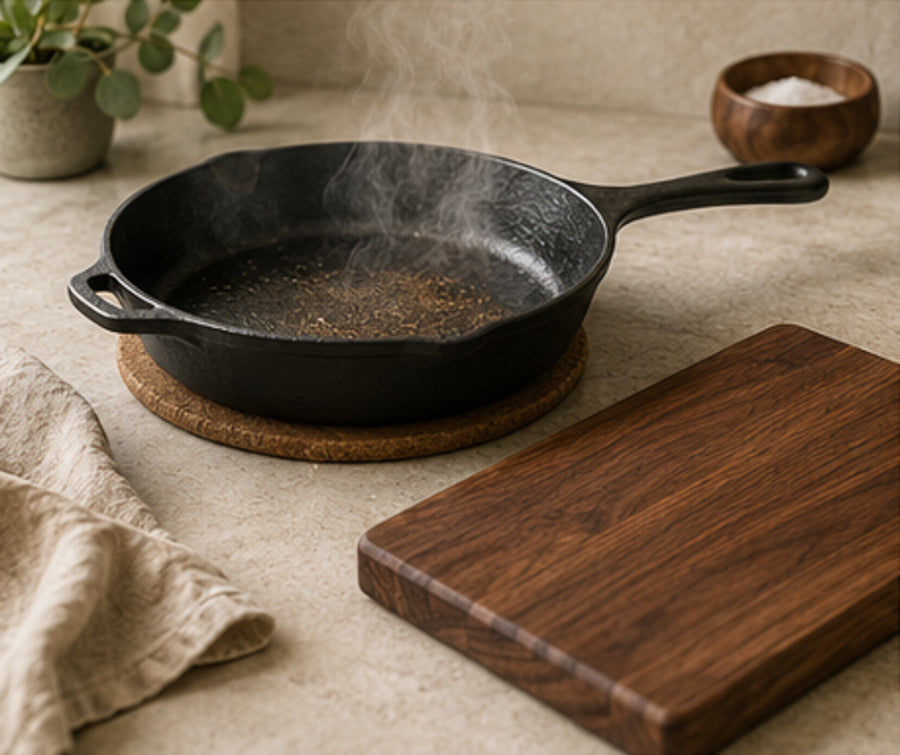
Protect it from heat
One rule for every board. A few more worth knowing.
Hot pots and pans directly on wood — any wood — is always a no. Same goes for the dishwasher. The combination of heat, prolonged soaking, and forced drying is hard on any board, and for end grain, it's a short road to cracking. Neither of those should ever happen.
Beyond that, end grain boards are better kept away from heat, rapid changes in temperature, moisture & humidity. Avoid cleaning it in the sink with hot water from the tap pouring onto it.
Edge grain is a different story. Our 1½" thick edge grain boards are built for the job — proteins off the grill, a roast out of the oven, that's exactly what they're made for.
How to clean it
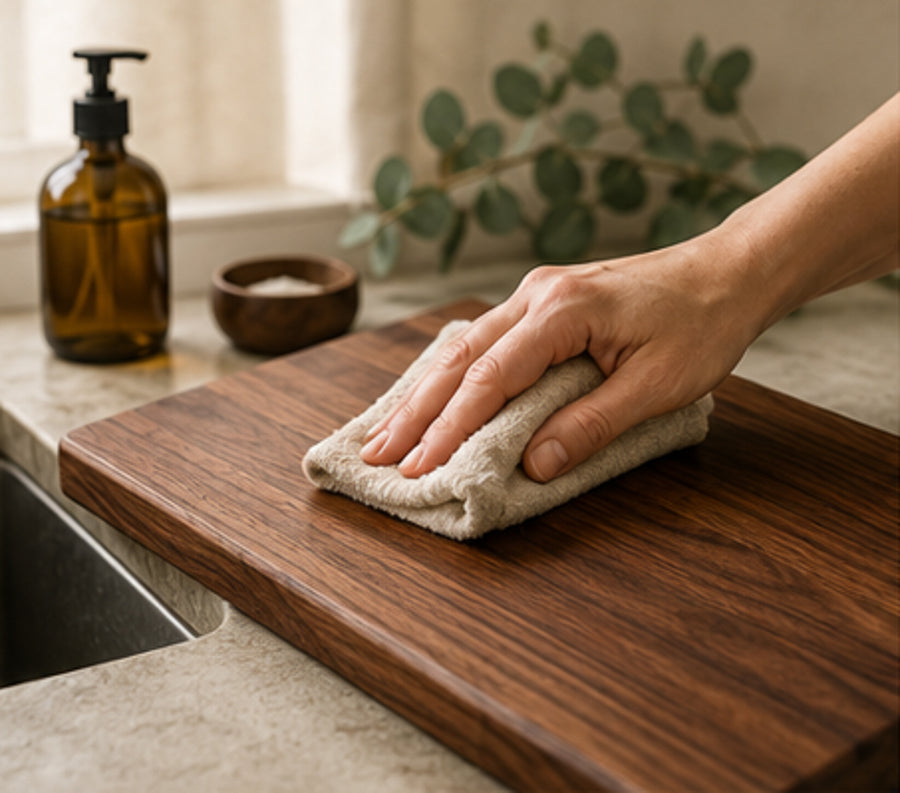
Clean it like you mean it. Just not like the dishes.
A warm, damp cloth is all you need for daily cleanup. Wipe it down, and dry it off — don't let it sit in water or soak in the sink. For stronger odours or stains, coarse salt and half a lemon scrubbed across the surface works better than any soap and won't strip the wood's finish. If you do use soap, a small amount of mild dish soap is fine occasionally. The goal is clean, not sterile. Wood isn't stainless steel, and it doesn't need to be treated like it.
Keep it fed
A fed board is a happy board.
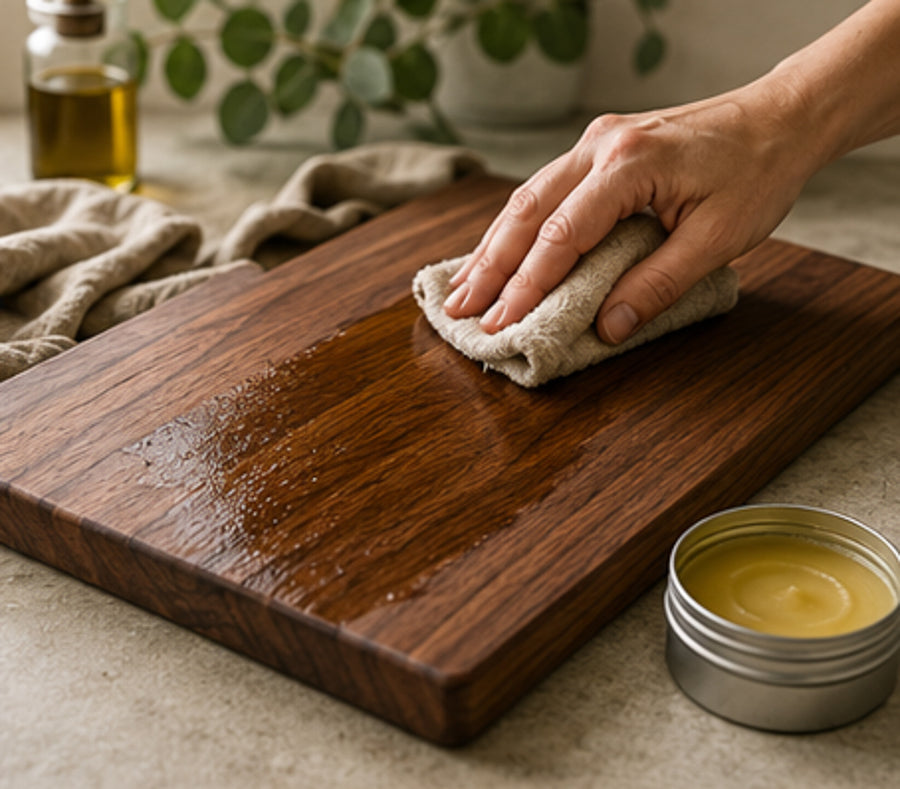
Wood is a living material — it dries out over time, and a dry board is a board that cracks, warps, and loses its surface. Oiling it regularly keeps the wood hydrated, protected, and looking the way it did the day it left the shop.
Use food-grade mineral oil, a beeswax conditioner, or our blend of both found here. We finish every board we make with it, and it's what we'd recommend for ongoing maintenance too.
Apply it generously, let it soak in for a few hours or overnight, then wipe off the excess. You'll know the board needs it when the wood starts to look flat or dull. or when water has stopped beading on the surface.
End grain vs Edge grain
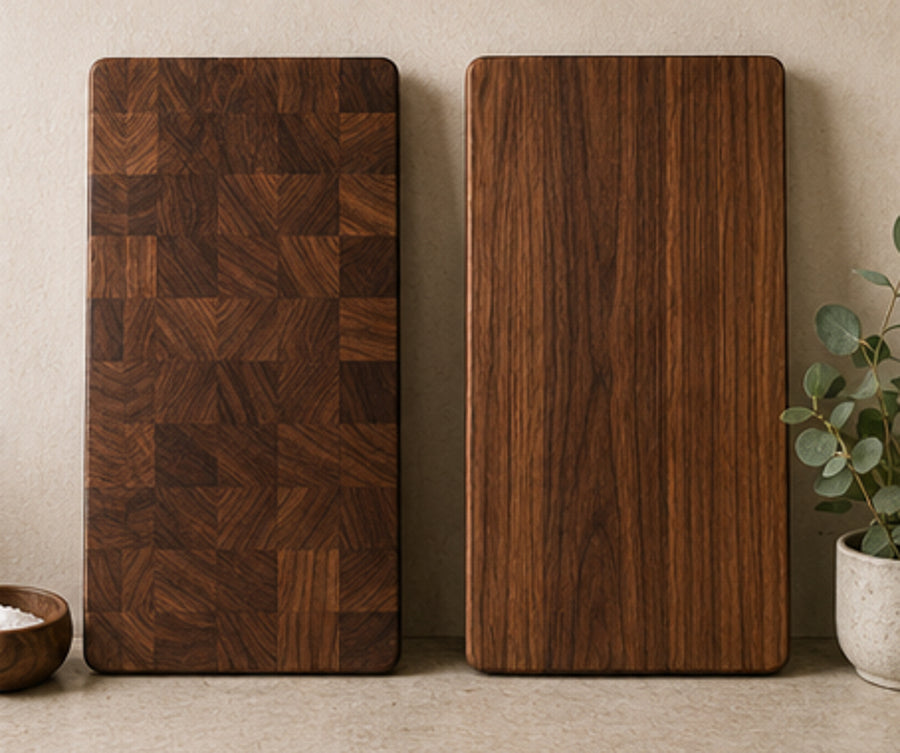
End grain and edge grain aren't cared for the same way.
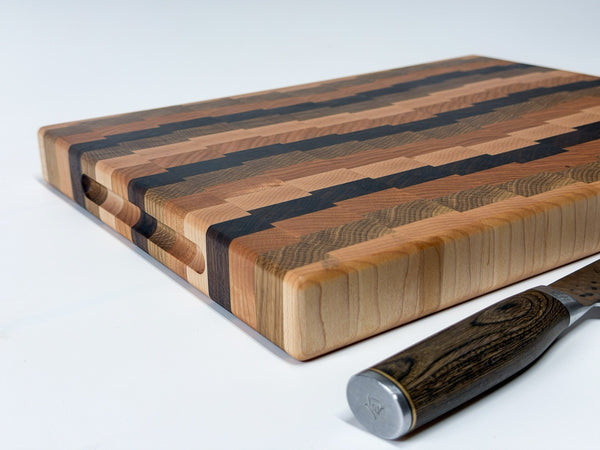
Both are hardwood, both are built to last — but they're constructed differently, and that affects how much attention they need. End grain is more forgiving on knife edges but requires a bit more care. Edge grain is tougher, more heat tolerant, and lower maintenance overall.
If you're not sure which one you have, or you're considering your next board, we put together a full, comprehensive breakdown.