How to Care for Your Cutting Board: The Complete Guide
Cutting Board Care
The Golden Rule: Keep It Dry
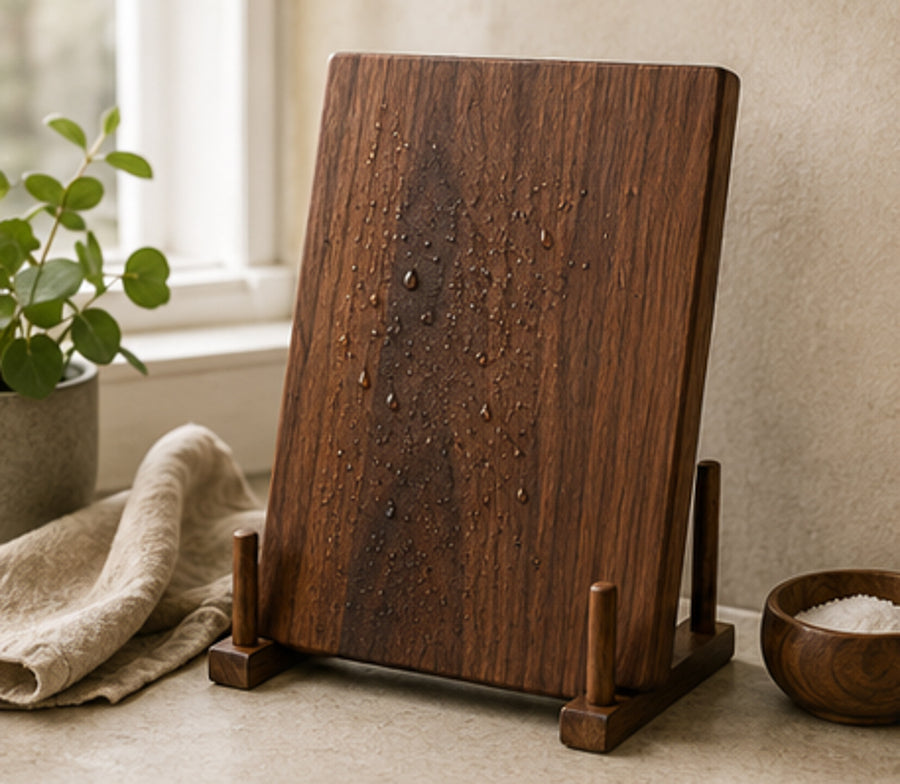
End grain boards handle normal kitchen use beautifully — but excess water is their enemy. Avoid washing under a running tap or scrubbing while water continuously hits the surface. This forces moisture deep into the wood unevenly, which can cause warping, bowing, or cracking over time. Never soak your board, submerge it, or place it in the dishwasher.
Cutting Board Care
How To Clean It
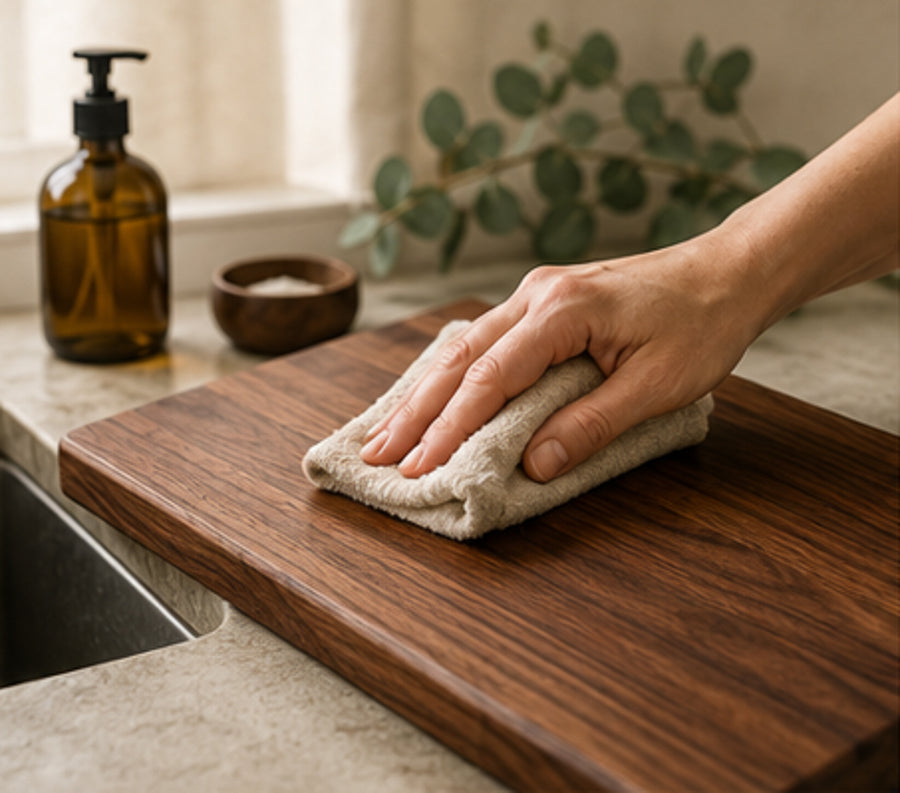
After use, wipe the surface with a damp cloth or sponge and a small amount of mild dish soap. If soap is used, rinse the cloth — not the board — and wipe again to remove any residue. Stand the board upright or allow air to circulate on both sides so it dries evenly. That's it.
Cutting Board Care
Keep It Fed
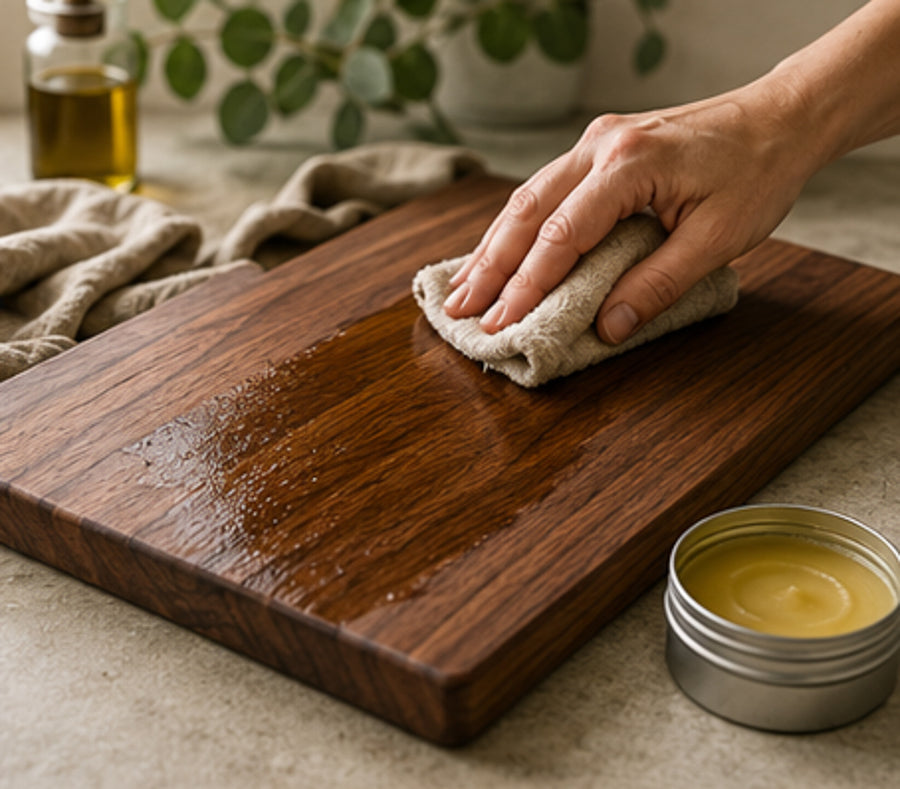
After use, wipe the surface with a damp cloth or sponge and a small amount of mild dish soap. If soap is used, rinse the cloth — not the board — and wipe again to remove any residue. Stand the board upright or allow air to circulate on both sides so it dries evenly. That's it.
Cutting Board Care
Protect It From Heat
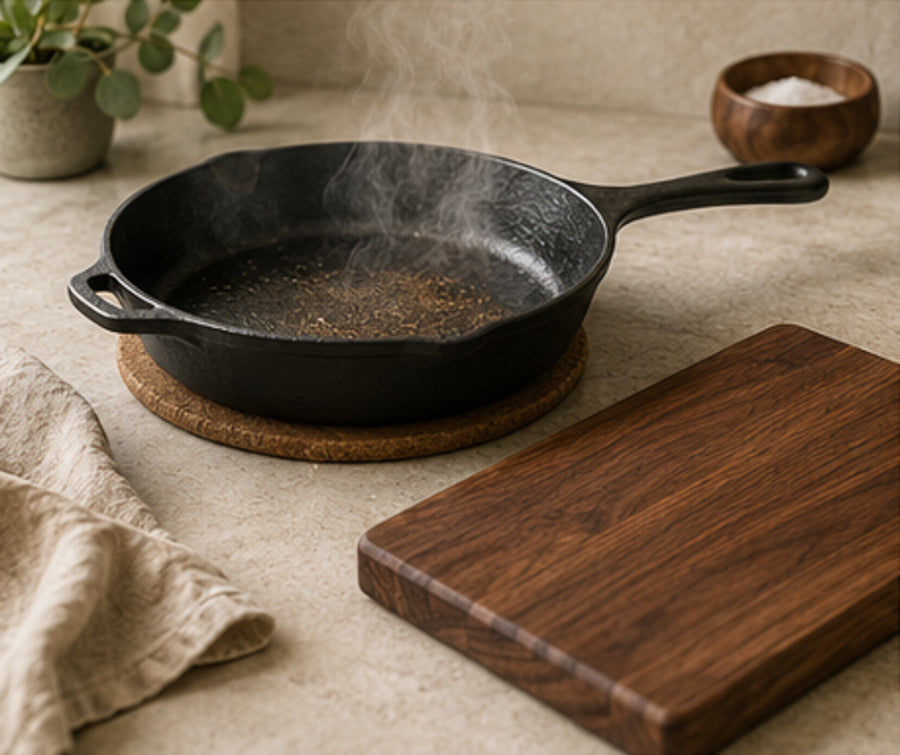
Avoid placing hot pans, roasting trays, or food directly from the oven onto an end grain board. Sudden heat shocks the wood and can cause cracking. Your board is built for prep and serving — not as a trivet.
Cutting Board Care
Reviving a Neglected Board
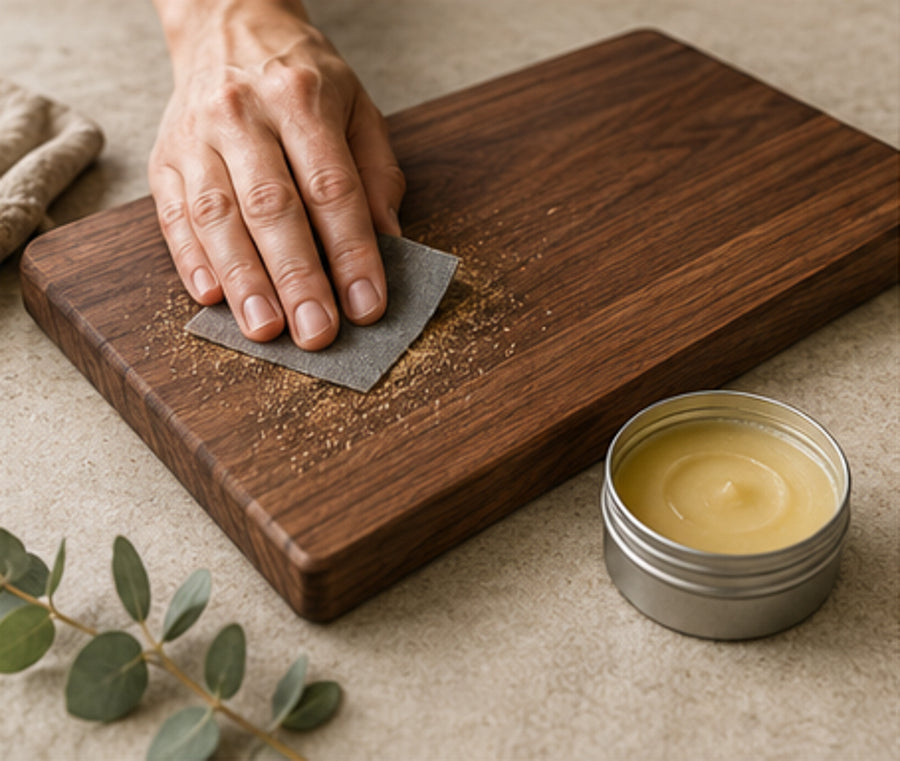
If your board has dried out, gone rough, or developed small cracks at the edges, you may be able to bring it back:
- Sand the surface lightly with 150 then 220-grit sandpaper to remove rough fibres and open the grain
- Wipe off all dust and let dry completely
- Apply 4-5 heavy coats of mineral oil over the course of a day, letting each coat absorb fully
- Finish with a generous coat of beeswax or board cream.
Most boards respond well to this. A board that has fully cracked through or warped significantly beyond flat is usually beyond recovery - but typically requires consistent neglect to reach.
Cutting Board Care
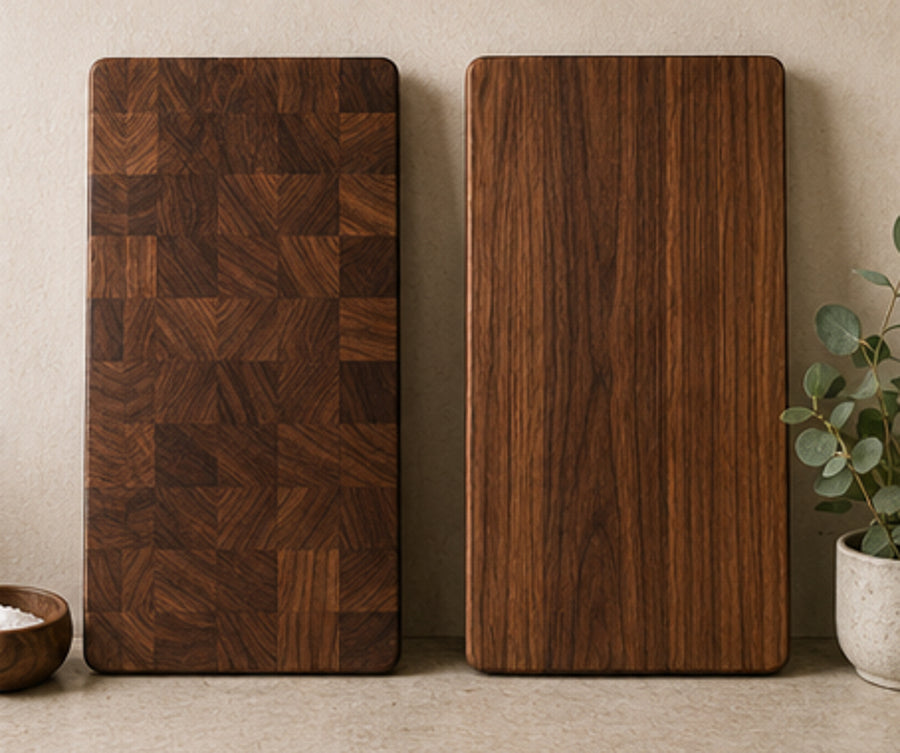
End Grain vs. Edge Grain: Same Routine
The care routine is identical for both. End grain boards absorb oil faster because you're oiling into the open ends of the wood fibres - plan to use more oil on your first few sessions. Edge grain boards may show surface scratches more visibly over time but respond just as well to oiling and can be refreshed just as easily.
Not sure which type you have or which to choose next? Read: Edge Grain vs. End Grain - What's the Difference?